
New waste regulations in Switzerland: what you need to know in 2026
Waste management is changing in Switzerland. With the new rules adopted by the Federal Council, the country aims to accelerate the transition towards a more circular economy, strengthen recycling, and better fight against incorrect waste disposal.
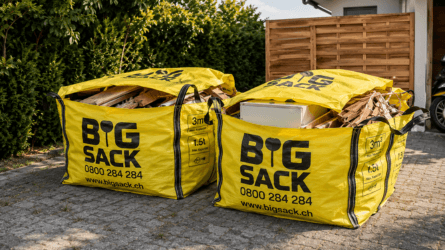
Waste management is changing in Switzerland. With the new rules adopted by the Federal Council, the country aims to accelerate the transition towards a more circular economy, strengthen recycling, and better fight against incorrect waste disposal.
For private individuals, companies, tradespeople, or property owners carrying out renovation work, these changes confirm an already well-established trend: it is no longer enough to simply throw things away. Waste needs to be sorted, recovered, and directed to the right channels.
But what does this actually change in practice? And how can you organise waste management more easily in everyday life?
Why Switzerland is strengthening its waste rules
Switzerland is often recognised for the quality of its recycling systems. Glass, PET, aluminium, paper, and cardboard are already collected separately and recovered through well-established channels. However, the overall volume of waste remains high, particularly in consumption, packaging, construction, and clearance projects.
The goal of the new rules is clear: use resources for longer, reduce avoidable waste, and recycle more materials whenever possible.
This is the logic of the circular economy. Instead of seeing an object as simple waste once it has been used, the idea is to extend its life, reuse what can still be reused, and then recycle materials before disposal becomes the last option.
The waste hierarchy becomes central
One of the key principles highlighted by the Swiss authorities is the waste hierarchy.
In practice, this means prioritising, in the following order:
- Avoid producing waste whenever possible
- Reuse objects or materials that are still in good condition
- Recycle recoverable materials
- Recover energy from remaining waste
- Dispose of waste as a last resort, for example in a controlled landfill
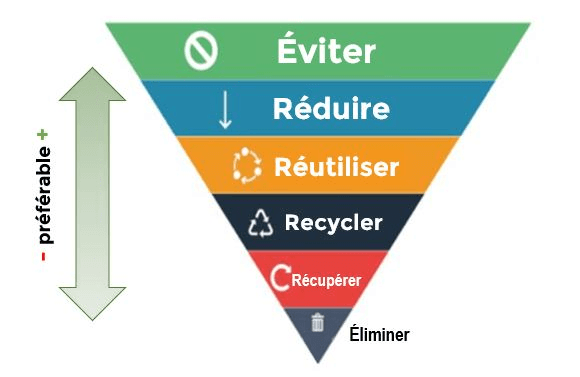
This logic applies to both individuals and businesses. During a move, a home clearance, a renovation, or a construction project, the right reflex is therefore to separate materials as much as possible: wood, metals, rubble, green waste, cardboard, plastic, bulky items, and special waste.
The earlier the sorting is done, the easier it becomes to recover materials properly.
Packaging and plastics: towards more recycling
Packaging is one of the major issues for the coming years. Switzerland wants to improve the collection and recycling of recoverable plastic packaging.
Today, many plastic items still end up in household waste, even though some of them could be recycled or better directed to the right channels. The new measures are intended to better structure these systems, encourage separate collection, and strengthen the responsibility of the players involved.
For households, this will likely mean more sorting solutions in the years ahead. For businesses, it reinforces the importance of clear waste-flow management, especially when they regularly handle packaging, materials, or goods.
Littering and incorrect disposal: stricter rules
The new rules also aim to better fight littering and illegal waste disposal. Throwing waste in public spaces, abandoning bulky items, or disposing of materials in the wrong place can have a significant environmental cost.
Beyond sanctions, the issue is also practical: many problematic situations arise because there is no simple solution available. When someone renovates a room, clears out a cellar, or ends up with waste that is too bulky for standard collection channels, it can be difficult to know what to do.
This is exactly where a simple, planned, and transparent collection solution can make the difference.
What this changes for private individuals
For individuals, these changes do not necessarily mean more complexity, but they do require better habits.
Before throwing something away, it is worth asking a few simple questions:
- Can the item be donated, resold, or reused?
- Can the materials be separated?
- Is the waste accepted at a standard recycling centre?
- Is a specific solution needed for construction waste, bulky items, or heavy materials?
- Is there a home collection solution available?
During a clearance, a move, or small renovation work, thinking about these questions in advance helps avoid unnecessary trips, sorting mistakes, and unpleasant surprises.
What this changes for companies and tradespeople
For companies, tradespeople, and construction professionals, waste management is becoming increasingly strategic.
A construction site or intervention often generates several types of waste: wood, rubble, metal, plastic, plaster, insulation, packaging, or bulky items. When everything is mixed together, sorting becomes more difficult and recovery less efficient.
On the other hand, good organisation from the start saves time, improves waste-flow documentation, and helps send materials to the right recovery channels.
For businesses, this can also become a credibility factor with clients, partners, and ESG requirements. Responsible waste management is no longer just a logistical constraint: it is also proof of professionalism.
How Big Sack can help
At Big Sack, our mission is to simplify the collection, transport, and recovery of waste in Switzerland.
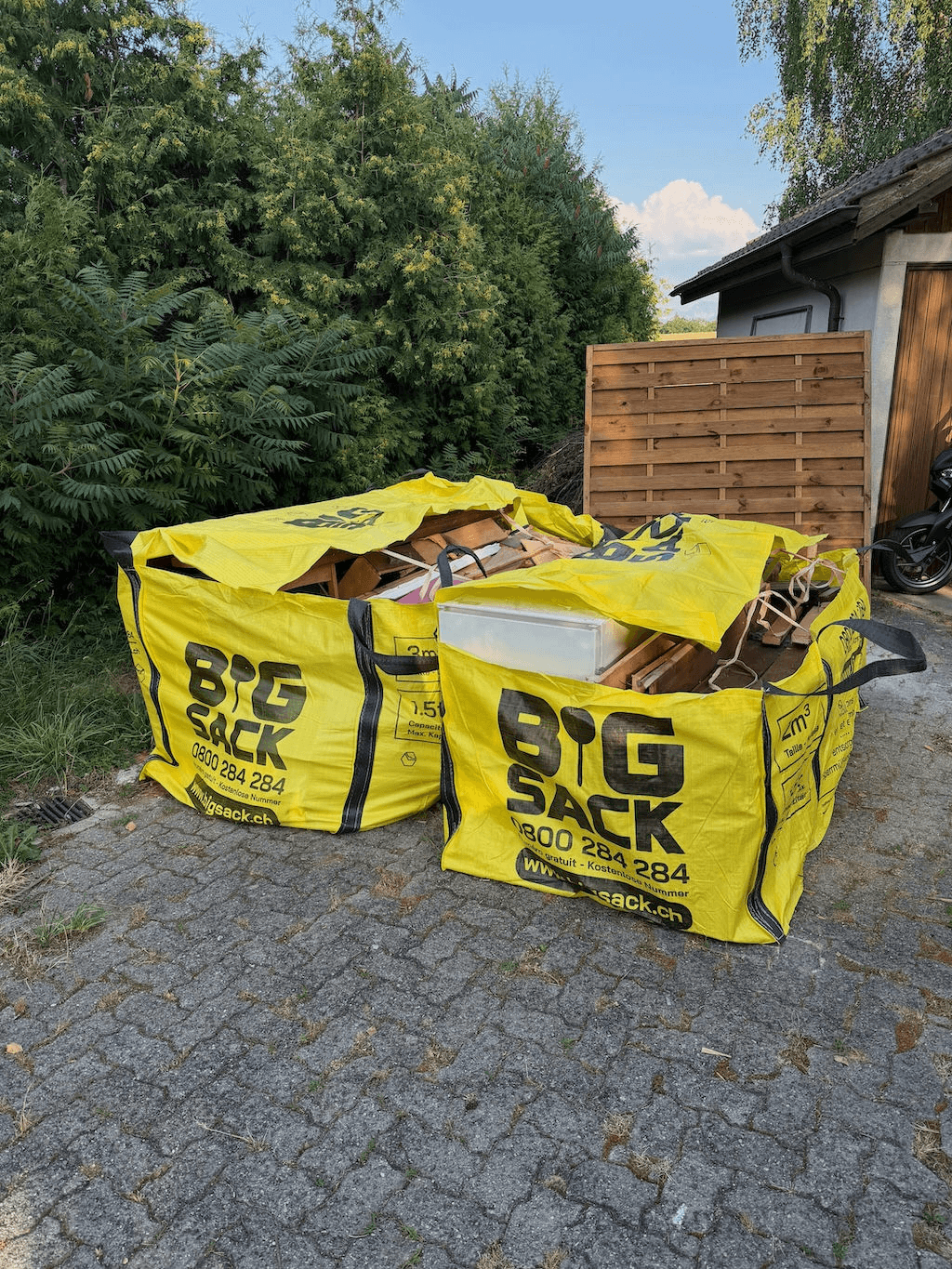
Our solutions help both individuals and professionals manage their waste more easily, without having to organise all the logistics themselves. Depending on the need, customers can order a Big Sack, a skip, or another solution adapted to the type of waste to be removed.
The goal is simple: make waste management more accessible, more flexible, and more transparent.
By making collection easier and directing waste to the right channels, Big Sack helps its customers sort better, reduce mistakes, and actively contribute to a more circular economy.
In summary
The new Swiss rules confirm a fundamental shift: waste management is becoming more demanding, but also smarter.
For individuals, this means adopting better habits during clearances, renovations, or moves. For businesses, it means better organising waste flows and prioritising solutions that combine simplicity, efficiency, and recovery.
The good news? Better waste management does not have to be complicated. With the right partners and the right solutions, it becomes much easier to sort, collect, and recover waste correctly.
At Big Sack, we are here to make this transition easier, one bag, one skip, and one collection at a time.